

Alternate Picking
The technique that separates good players from great ones

Most guitarists plateau around the same place. They can play the things they already know, fast, but the moment they try something new at speed, it falls apart. Nine times out of ten, the culprit is alternate picking that was never properly built from the ground up.
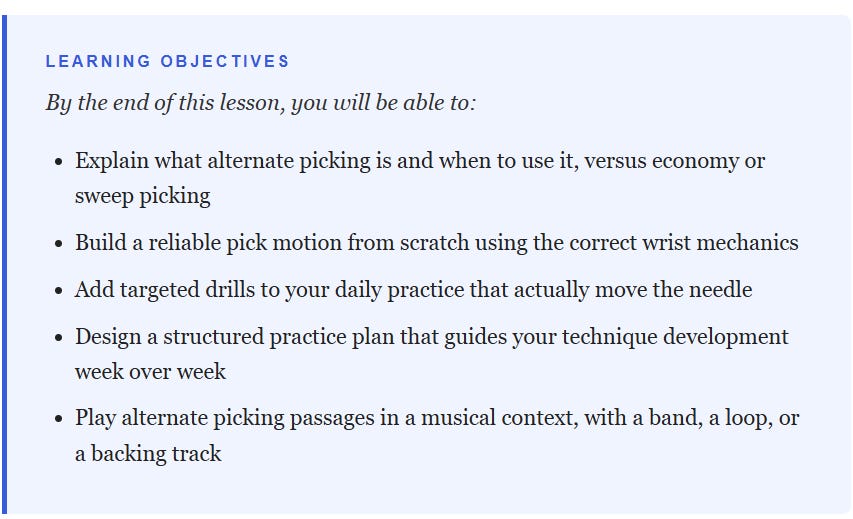
This issue is a deep dive. We’re going to look at the mechanics, the common failure points, the practice methods that actually work, and how some of the most recognizable guitarists in the world think about this technique differently than you might expect.
Good. Now let's get into it.
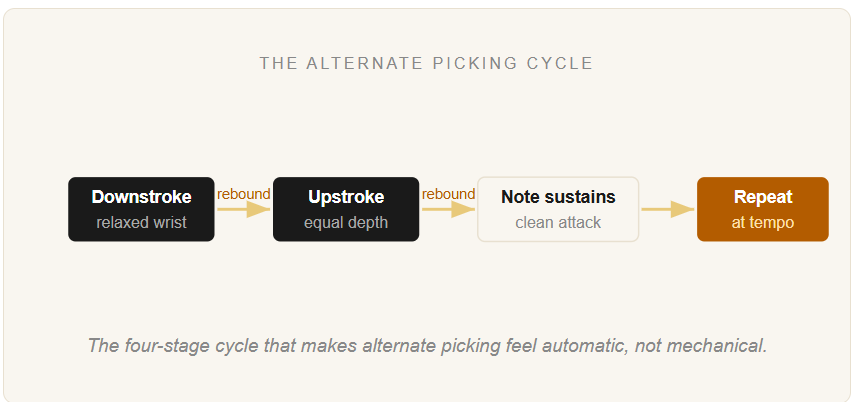
The thing most players misunderstand about alternate picking is the word "alternate." They think it means strict down-up-down-up. But what it really describes is a rebound, your pick is always returning to the string, not travelling away from it. The motion is circular, not linear.
Enjoying this so far?
10 Things You Can Try This Week
1
The Pause Drill: Play a single note, down and up. Stop. Check your pick position. It should be slightly above the string it just crossed. If it’s pointing away from the guitar, you’re swiping, not picking.
2
50% Speed Rule: Whatever your “comfortable” speed is, cut it exactly in half. Practice there for 10 minutes before moving up. Speed is a result of accuracy, not something you chase.
3
One String, One Fret: Pick a single fret on the B string. Alternate pick it for 2 minutes straight with a metronome. No fretting hand movement. This isolates the pick hand entirely so you can feel exactly what it’s doing.
4
Remove the Pick Entirely: Spend 5 minutes alternate picking with just your thumbnail. It forces a looser grip and teaches you what a natural rebound actually feels like.
5
The Accent Test: Play a 16th-note pattern and accent every downstroke. Then try accenting every upstroke instead. If the accents sound wildly uneven, your strokes aren’t balanced, this is the drill that fixes it.
6
Inside vs. Outside Picking: Practice string changes where the pick travels between strings (outside picking) and where it crosses back over (inside picking). Most players are much stronger at one than the other. Find yours.
7
Film Your Pick Hand: Prop your phone at an angle and record 60 seconds of alternate picking. Watch it back at 0.5x speed. You will spot things immediately that you’ve been missing for years.
8
The Burst Method: Play 4 notes as fast as you possibly can, then stop. The burst should be clean and even. If note 3 or 4 is consistently weaker, that’s your downstroke or upstroke, depending on where in the phrase you started.
9
Pick Depth Variation: Practice going progressively shallower, barely grazing the string, until you’re playing at about 20% depth. This is where speed lives. Most players dig too deep and fight the string on every stroke.
10
End on an Upstroke: Most licks and phrases end on a downstroke by habit. Practice ending every phrase on an upstroke instead. It forces you to think ahead and breaks the muscle memory that makes your picking feel “stuck.”
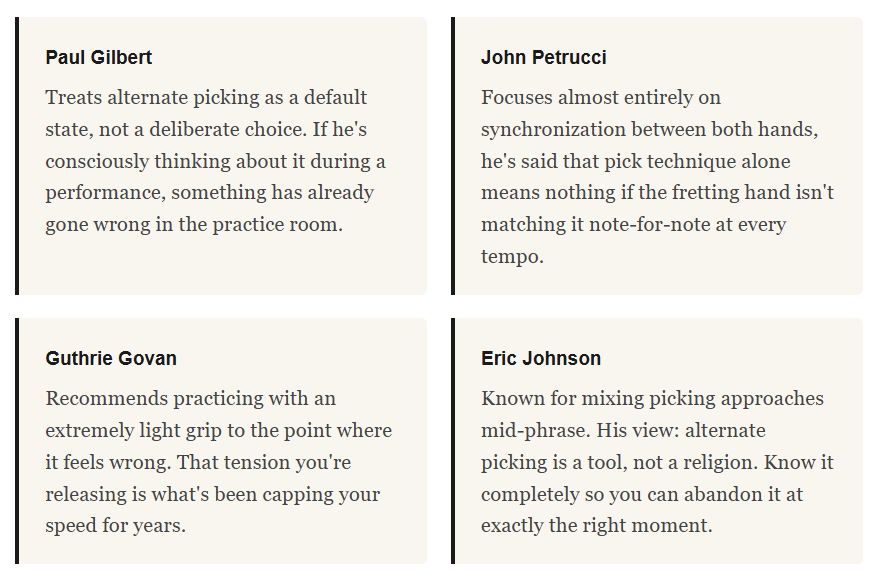
How the Pros Think About Alternate Picking
These aren’t practice tips pulled from tutorials. This is how working players and well-documented artists have described their relationship to the technique in interviews.
This one's worth passing on.
Your 20-Minute Alternate Picking Practice Block
You read this issue. Now here’s how to actually use it. This is a structured 20-minute session you can run today, no excuses, no “I’ll do it later.”

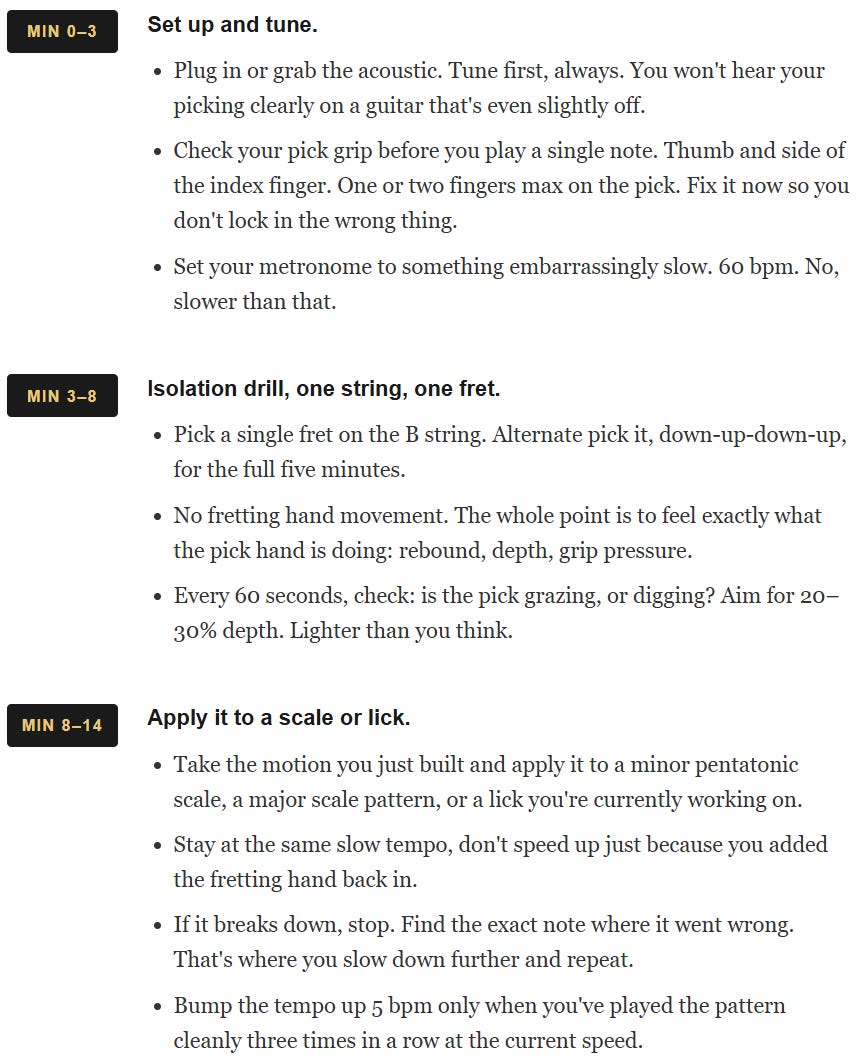
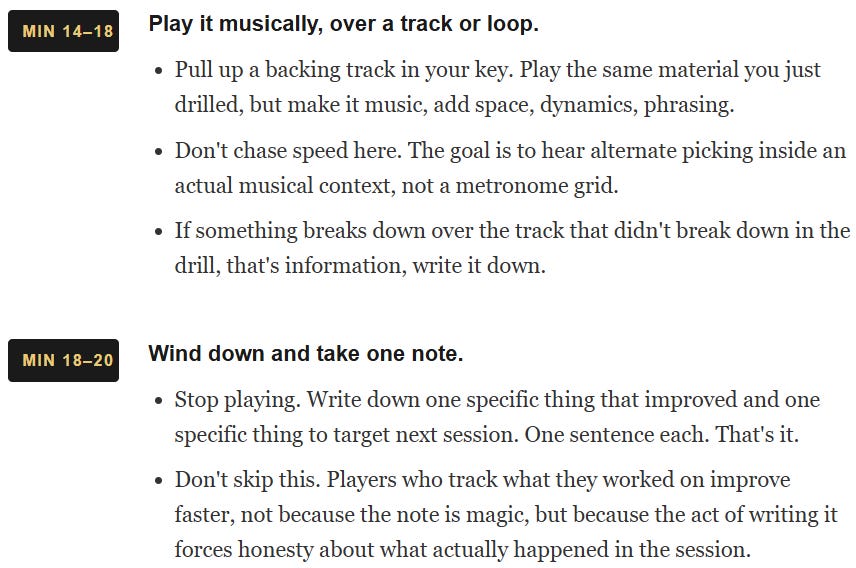
Twenty minutes. Done right. That's how technique gets built.
From the Archive: Read These Next


About the author
Ron Watson
Ron is the founder of Lundinke. The newsletter is his primary work, built for players across the full range: beginners, working musicians, gear collectors, and people who treat guitar as part of who they are. His writing lives at the intersection of technique and story. Always useful, never preachy, no padding.
His best work hits strong personal voice, drives real engagement, and hands the reader a technique they can pick up the guitar and use that same day. That’s the standard. Every issue.