

Confidence Is the Invisible Advantage
The unseen force behind progress, resilience, and long-term success.

Confidence is often misunderstood.
We treat it like a personality trait and something you either have or don’t. We assume confident people woke up that way, fully formed, immune to doubt, hesitation, or fear.
That belief quietly wrecks a lot of lives.
Because if confidence is something you’re born with, then effort feels pointless. And if effort feels pointless, you stop trying not just at work or in creative pursuits, but in conversations, relationships, opportunities, and self-expression.
The truth is simpler and far more hopeful:
Confidence is a learned skill.
And like any skill, it’s built through reps, not personality.
What Confidence Actually Is (And Isn’t)
Confidence is not arrogance.
It’s not bravado.
It’s not pretending you know everything.
And it’s definitely not the absence of fear.
Confidence is self-trust.
It’s the quiet belief that:
You can handle discomfort
You can figure things out as you go
You’ll survive failure without losing your identity
You don’t need permission to start
Confident people still feel doubt.
They just don’t let doubt make decisions for them.
That distinction matters.
Why Most People Struggle With Confidence
Most confidence problems don’t come from trauma or dramatic failure.
They come from micro-patterns that repeat daily.
Things like:
Saying “I’ll start tomorrow” too often
Avoiding uncomfortable conversations
Over-consuming information instead of acting
Letting other people’s opinions override your own instincts
Abandoning plans at the first sign of friction
Each of these sends a small signal to your nervous system:
“I don’t trust myself to follow through.”
Over time, those signals stack.
Confidence doesn’t disappear all at once.
It erodes quietly, one avoided action at a time.
The Confidence Equation No One Talks About
Confidence follows a simple pattern:
Action → Evidence → Self-Trust → Confidence
Not the other way around.
Most people wait for confidence before they act.
Confident people act before they feel ready.
They understand something subtle but powerful:
Confidence is the result of keeping promises to yourself.
Not big promises.
Small ones.
Daily ones.


How Long Does Confidence Actually Take to Build?
This is where most advice lies to you.
Confidence is not a 30-day transformation.
But it also doesn’t take years to feel a shift.
Here’s a realistic breakdown:
7–14 days
You start noticing internal resistance and pushing through it anyway.
21–30 days
You feel calmer taking action.
Less overthinking.
Less emotional drama.
60–90 days
Your self-talk changes.
You stop negotiating with fear.
Your identity begins to shift.
6–12 months
Other people describe you as “confident,” even though you feel normal.
Confidence builds logarithmically, not linearly.
The early reps feel heavy.
Later reps feel automatic.
Everyday Life Correlations (Where Confidence Actually Shows Up)
Confidence isn’t just about careers or creativity.
It shows up everywhere.
Conversations
You stop rehearsing what to say.
You speak clearly.
You listen without trying to impress.
Decision-Making
You choose faster.
You regret less.
You accept tradeoffs without spiraling.
Work
You stop hiding behind perfection.
You ship work.
You ask for clarity instead of approval.
Relationships
You set boundaries without guilt.
You don’t over-explain.
You walk away when alignment disappears.
Creativity
You stop waiting to be “ready.”
You create in public.
You detach from outcomes.
Confidence simplifies life.
Indecision complicates it.


Practical Confidence Life Hacks (No Fluff)
These aren’t affirmations.
They’re behavioral shortcuts that work.
1. Shrink the Commitment Window
Never ask yourself to commit forever.
Commit to one rep.
Confidence hates long horizons.
It thrives on short execution loops.
“Just today.”
“Just this email.”
“Just this conversation.”
2. Reduce Choice, Increase Structure
Decision fatigue kills confidence.
Wear fewer options.
Create default routines.
Automate small decisions.
Confidence grows when your brain has less to negotiate.
3. Do One Hard Thing Early
Confidence is state-dependent.
When you do something difficult early in the day:
Your nervous system stabilizes
Your tolerance for discomfort increases
Everything else feels lighter
Hard first. Easy later.
4. Track Follow-Through, Not Outcomes
Outcomes lie.
Behavior doesn’t.
Confidence grows when you track:
Did I show up?
Did I finish?
Did I keep the promise?
Outcome obsession creates anxiety.
Process tracking builds trust.
5. Stop Borrowing Other People’s Confidence
Comparison feels productive.
It isn’t.
Borrowing standards from people with different contexts erodes identity.
Confidence grows when you compete with your previous self, not someone else’s highlight reel.
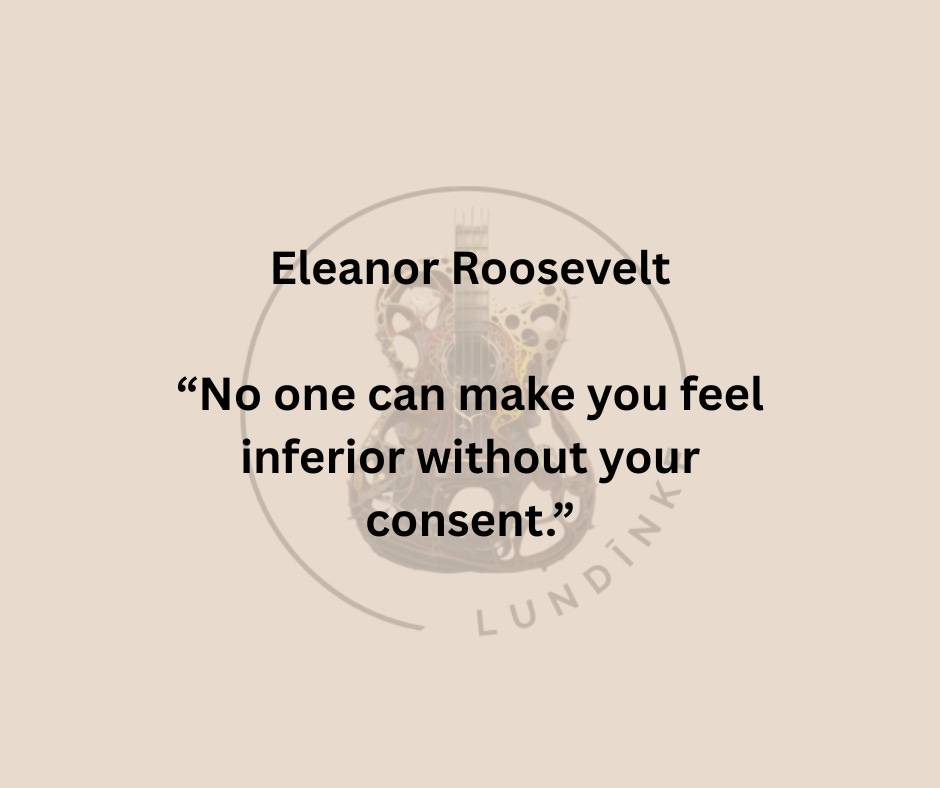
The Hidden Cost of Low Confidence
Low confidence doesn’t just limit achievement.
It quietly taxes everything.
You hesitate instead of deciding
You over-prepare instead of acting
You tolerate situations you’ve outgrown
You ask for permission you don’t need
You shrink your goals to avoid discomfort
People don’t notice low confidence immediately.
They feel it.
It changes how you speak.
How you carry yourself.
How much space you take up.
Confidence is contagious, but so is hesitation.
Why Confidence Changes How Others Treat You
Here’s the uncomfortable truth:
People respond less to what you say and more to what you signal.
Confidence signals:
Emotional stability
Self-direction
Reliability
Low neediness
Clear boundaries
This is why confident people:
Get more opportunities
Are trusted faster
Are listened to more closely
Are given more autonomy
Not because they’re better.
Because they feel safer to bet on.
Confidence Isn’t Loud, It’s Calm
True confidence isn’t dominant.
It’s grounded.
It looks like:
Pausing before responding
Saying “I don’t know” without shame
Choosing clarity over cleverness
Walking away from chaos
Letting silence do some of the work
Confidence removes urgency.
And urgency is where most bad decisions live.
The Identity Shift That Changes Everything
At some point, confidence stops being something you work on.
It becomes something you operate from.
That shift happens when you internalize one belief:
“I can trust myself to respond well, even when things go wrong.”
Not perfectly.
Just well enough.
Once you trust that:
Fear loses leverage
Failure loses meaning
Opinions lose power
Confidence isn’t certainty.
It’s resilience.
A Final Reframe
You don’t need to “become” confident.
You need to stop breaking trust with yourself.
Every time you:
Finish what you start
Speak honestly
Do the uncomfortable thing
Act before you feel ready
Choose progress over perfection
You cast a vote for the person you’re becoming.
Confidence isn’t built in moments of motivation.
It’s built in moments of resistance.
Any JOB
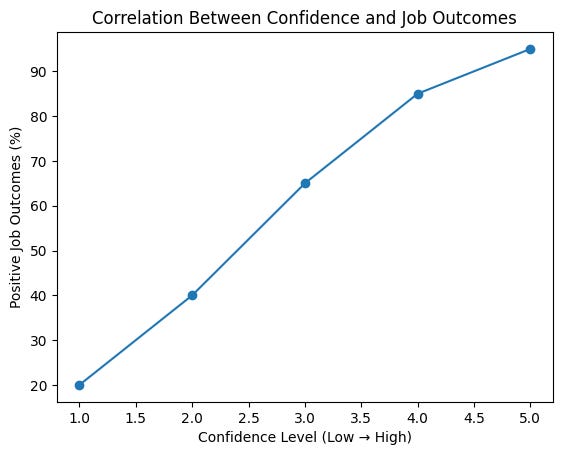
Here’s a simple correlation graph showing how confidence level tends to relate to job outcomes (offers, promotions, leadership opportunities, interview success).
How to interpret this graph
X-axis (Confidence Level): Internal self-trust, decisiveness, willingness to act
Y-axis (Positive Job Outcomes %): Interviews converted, roles landed, growth opportunities
Key takeaways you can use in content or Substack
Confidence shows a strong positive correlation with job outcomes
The biggest gains happen between low → moderate confidence (levels 2–4)
At higher confidence levels, returns compound through visibility, trust, and leadership perception
This is behavioral, not skill-based, confidence amplifies existing ability
Important note (for credibility)
This is a conceptual / illustrative model, not a single academic dataset.
However, it aligns closely with real-world findings in:
Hiring psychology
Leadership perception studies
Behavioral economics
Performance reviews across knowledge work
If you want next:
I can turn this into a Substack-ready visual explanation
Add confidence vs salary bands
Map confidence → interviews → offers → promotions
Create a carousel slide breakdown with captions for LinkedIn or Instagram
Your Move
If this resonated, don’t just agree with it….practice it.
Pick one small promise you’ve been avoiding.
Keep it today.
No audience.
No announcement.
No perfection.
That’s how confidence starts.
And if you want a consistent framework for building confidence through action, discipline, creativity, and self-trust, subscribe here.
This space is for people who are done waiting to feel ready.