
Iconic Album Covers of the 1980s That Defined Music History (and the money behind why they mattered)
In the ’80s, an album cover wasn’t decoration. It was a sales weapon and your “billboard” in a record store aisle, fighting for attention in a physical economy worth billions.
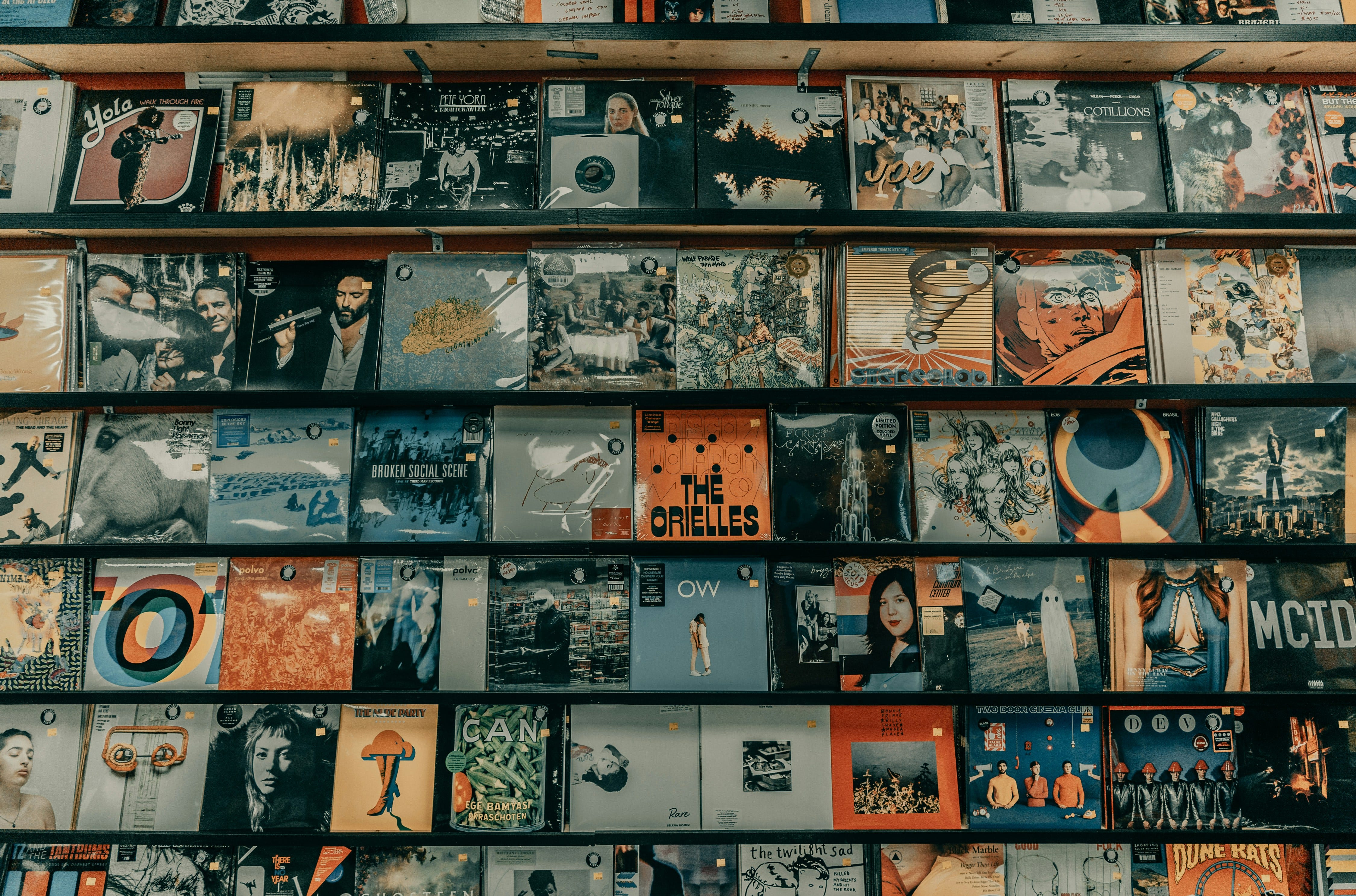
The 1980s were the last great decade where album artwork had direct, measurable power over what people bought.
Not because listeners cared more back then.
Because the marketplace was built differently.
Music wasn’t a tap. It was a product you carried home—a vinyl sleeve, a cassette case, a glossy CD jewel box. And in that world, the cover did two jobs at once:
Identity (who is this artist? what world are they inviting me into?)
Conversion (do I buy this right now?)
That’s why the ’80s produced album covers that still live in our collective memory: they weren’t just good images—they were cultural branding during a period when recorded music revenue was surging and formats were battling for dominance.
The financial reality: why covers mattered more in the ’80s
A few data points explain why album art hit harder then than now:
In the late ’80s, physical formats were massive money. A widely shared compilation of RIAA data notes that cassettes peaked at about $3.7B in U.S. revenue in 1989. (Visual Capitalist)
That same visualization shows CDs rising rapidly through the decade, becoming the premium format that reshaped packaging expectations.
Another long-run format-share view shows CDs overtaking LPs around 1987 and then continuing upward.
At the top end, the best albums became global consumer products. Thriller is still widely cited at approximately 70 million copies worldwide.
That combination of high retail competition + huge consumer spending + artist “brands” becoming global is the perfect recipe for iconic cover art.
So let’s go through the album covers that didn’t just look good…
They defined how music looked, how artists positioned themselves, and how entire genres marketed identity.
What makes an ’80s album cover “iconic” (not just popular)
An iconic cover tends to do four things:
Reads instantly from across a store
Signals genre without explanation
Creates a myth around the artist
Stays reproducible (posters, magazine ads, merch, later CD reissues)
Here are the covers that nailed that formula.
1) Michael Jackson — Thriller (1982)
If you had to pick one cover that proved an album could be luxury pop, it’s Thriller.
It’s deceptively minimal: a crisp portrait, clean typography, and a look that says “global star,” not “recording artist.” That was the genius. Thriller didn’t sell itself like a rock record—it sold itself like cinema, fashion, and celebrity power rolled into one.
Why it defined history:
It aligned the visual with the new pop economy: superstardom, MTV, worldwide distribution. The cover made the album feel inevitable.
The money behind it:
Thriller remains widely cited at approximately 70M copies worldwide a number so large it turns a cover into one of the highest-ROI “ads” in entertainment history.
2) Prince and the Revolution — Purple Rain (1984)
The Purple Rain cover is myth-building at maximum intensity.
Motorcycle. Purple atmosphere. Stage-light drama. Prince posed like a romantic hero and a rock god at the same time. It’s not “album artwork” it’s a character poster.
Why it defined history:
Because it turned Prince into an archetype. The cover wasn’t just about the music; it was about entering the “Purple Rain universe.”
What it taught the industry:
If you can create a world visually, fans will buy into the world emotionally and keep buying.
3) U2 — The Joshua Tree (1987)
This cover feels like a film still from a movie you’ve never seen but already understand.
Black-and-white portraiture. Desert space. A band framed like a story. The tone is serious, searching, almost spiritual.
Why it defined history:
It helped shift rock toward “importance.” It visually communicated that this wasn’t just a collection of songs—it was a statement.
Financial context:
By the late ’80s, physical formats were still expanding, and covers like this sold not only music but identity—especially as the CD era pushed albums into “premium object” territory.
4) Guns N’ Roses — Appetite for Destruction (1987)
This is one of the best examples of a cover becoming a merch engine.
The cross-and-skulls layout is basically a logo system—each member represented as an icon, arranged with simple symmetry and instant readability.
Why it defined history:
Because it translated rock chaos into a brand mark. You can print it anywhere: shirts, posters, patches, banners—and it still reads.
The ’80s lesson:
If your cover can be worn, you’re no longer selling just an album, you’re selling membership.
5) Metallica — Master of Puppets (1986)
A field of graves. Strings. A controlling hand.
This cover is symbolic, cinematic, and brutally clear: the album is about manipulation, mortality, and power without needing to explain it.
Why it defined history:
It elevated metal artwork from “shock” to “concept.” It’s aggressive, but intelligent and making it timeless beyond its era.
6) N.W.A — Straight Outta Compton (1988)
Perspective changed everything.
The camera angle looks upward, forcing the viewer into a vulnerable position. It’s confrontational. You’re not observing, you’re being addressed.
Why it defined history:
It became a visual blueprint for hip-hop’s shift into direct, documentary realism. The cover communicates power, place, and tension instantly.
The marketing function:
On a shelf, it’s impossible to ignore and impossible to confuse with anything else.
7) Public Enemy — It Takes a Nation of Millions to Hold Us Back (1988)
This cover looks like protest design: layered, urgent, bold, political.
Why it defined history:
Because it treated the album as a cultural weapon. The design doesn’t “invite” you, it demands your attention.
What it signaled in the marketplace:
In an era when physical retail was still king, this cover turned the rack into a battleground for ideas.
8) New Order — Power, Corruption & Lies (1983)
A still-life floral painting paired with coded color blocks is the kind of confident contradiction only New Order could pull off.
It’s beautiful and “gallery-like,” but also systemized like early UI design before UI design was common.
Why it defined history:
It proved you could sell pop music with fine-art energy and graphic design intelligence at the same time.
Why it’s so ’80s:
Because the decade loved systems: logos, symbols, visual identities that could travel.
9) Talking Heads — Remain in Light (1980)
This cover feels like an early warning about the future.
The faces look processed, mediated, half-human like technology is interfering with identity. It matches the album’s layered rhythms and global collage energy.
Why it defined history:
It made “art rock” look like modern life: strange, patterned, wired, and abstract.
10) The Smiths — The Queen Is Dead (1986)
The Smiths made melancholy look curated.
This cover (and their broader visual language) used portraiture and vintage imagery to turn emotional nuance into brand identity.
Why it defined history:
Because it proved that quiet can be iconic if the art direction is consistent and emotionally specific.
11) Peter Gabriel — So (1986)
A simple portrait, but surreal enough to stick.
The cover isn’t loud, but it’s memorable. The expression and composition make it feel intimate and slightly off, like a dream you can’t fully explain.
Why it defined history:
It shows how a cover can be clean and still psychologically strong and perfect for the decade’s shift toward CDs and smaller cover real estate.
12) Dire Straits — Brothers in Arms (1985)
A floating guitar silhouette against open sky is pure elegance.
It feels premium, airy, hi-fi. It looks like a record you buy to test speakers—exactly the kind of consumer behavior that surged as CDs rose through the decade.
Why it defined history:
It made restraint look expensive.
13) Joy Division — Unknown Pleasures (legacy impact into the ’80s)
Yes, it’s 1979, but it defined ’80s visual language more than many actual ’80s releases.
Those pulsar-wave lines became one of the most reproduced graphics in music history.
Why it defined history:
It proved a cover could become a universal symbol, detachable from the album itself, and still hold cultural weight.
The merch lesson:
The “wearable cover” phenomenon exploded later, but the blueprint is here.
14) Madonna — Like a Virgin (1984)
This cover is pure persona.
It’s provocative without being explicit, stylized without being distant, and perfectly aligned with Madonna’s brand: control, sexuality, reinvention.
Why it defined history:
Because it showed pop could be visual strategy. You weren’t just listening, you were buying into a narrative.
15) AC/DC — Back in Black (1980)
Black-on-black with a metallic logo: one of the cleanest “statement covers” ever.
No scene. No portrait. No story, just power.
Why it defined history:
Because it turned simplicity into authority.
The money behind it (macro level):
At this scale, iconic covers become long-term assets: reissues, box sets, posters, shirts, licensing—the image keeps earning because it stays recognizable.
What these covers changed about music
The biggest shift the ’80s locked in was this:
Artists stopped being “bands with albums” and became brands with identity systems.
Album covers weren’t afterthoughts. They were part of the commercial strategy, especially during a decade when physical sales were huge and formats were rapidly shifting.
When cassettes can peak around $3.7B in U.S. revenue (1989) (Visual Capitalist) and CDs are rapidly taking over share, presentation matters. Consumers are choosing what to buy based on packaging cues—premium cues, rebellion cues, cultural cues.
That’s why “iconic” covers in the ’80s aren’t just famous.
They’re effective.
They made people stop.
They made people feel something.
They made people spend.
And they built visual memories strong enough to survive long after the rack disappeared.

