

Most Guitar Practice Is Bullshit! And a video to prove it.
This Is the Minimum That Actually Works.
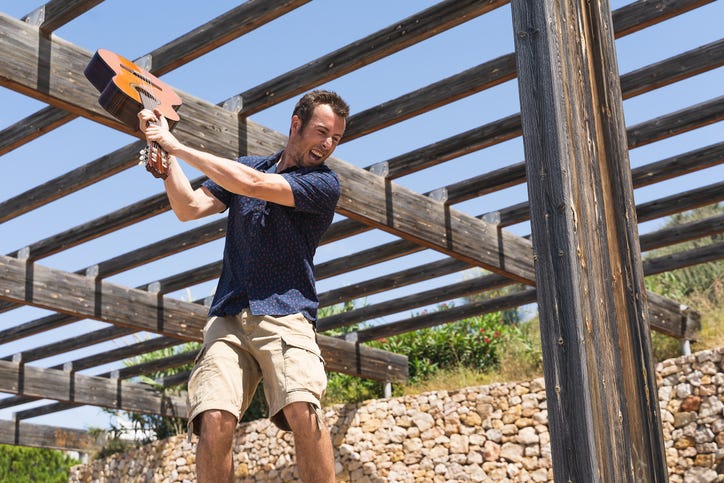
Why this matters (right now)
Most guitarists don’t fail because they lack talent.
They fail because they don’t know what to practice, when to practice it, or how to practice without frying their nervous system.
Confusion is exhausting.
Decision fatigue kills momentum.
Burnout quietly convinces you that “maybe you’re just not built for this.”
Wednesday is where that stops.
This is the day we replace vague intention with specific action.
This is where progress becomes unavoidable.
The Technique Without Burnout Plan exists for one reason:
To help you practice technique that actually sticks without tension, frustration, or endless second-guessing.
Not more hours.
Not more exercises.
Just the right work, done consistently, in a way your body and brain can sustain.
The core promise
Cleaner playing. Less tension. Zero guesswork.
And more importantly:
Paid Lundinke members never wonder what to practice.
That’s not a marketing line.
That’s a design principle.

The real problem with most technique practice
Let’s be honest.
Most technique plans fail because they:
Chase too many mechanical ideas at once
Ignore musical context
Treat tension like a personal flaw instead of a physical signal
Confuse discipline with suffering
So players bounce between:
YouTube rabbit holes
Screenshot folders of exercises
Half-finished practice routines
Guilt-driven “I’ll start again Monday” cycles
The result?
📉 Inconsistent progress
📉 Rising frustration
📉 Physical tightness that sneaks into everything you play
This isn’t a motivation issue.
It’s a systems issue.
The Technique Without Burnout Framework
Every week follows the same simple structure:
1️⃣ One mechanical focus
Technique improves fastest when your nervous system knows exactly what it’s aiming at.
Not speed and accuracy and string crossing and phrasing and tone and endurance.
Just one thing.
Examples:
Pick depth consistency
Fretting-hand pressure reduction
Synchronization between hands
Wrist angle stability
String tracking accuracy
Why this works:
Focused attention reduces tension by up to 30–40% (motor learning studies consistently show this)
The brain adapts faster when the signal is clear
You stop “muscling through” and start refining
This is how technique compounds instead of resets every week.
