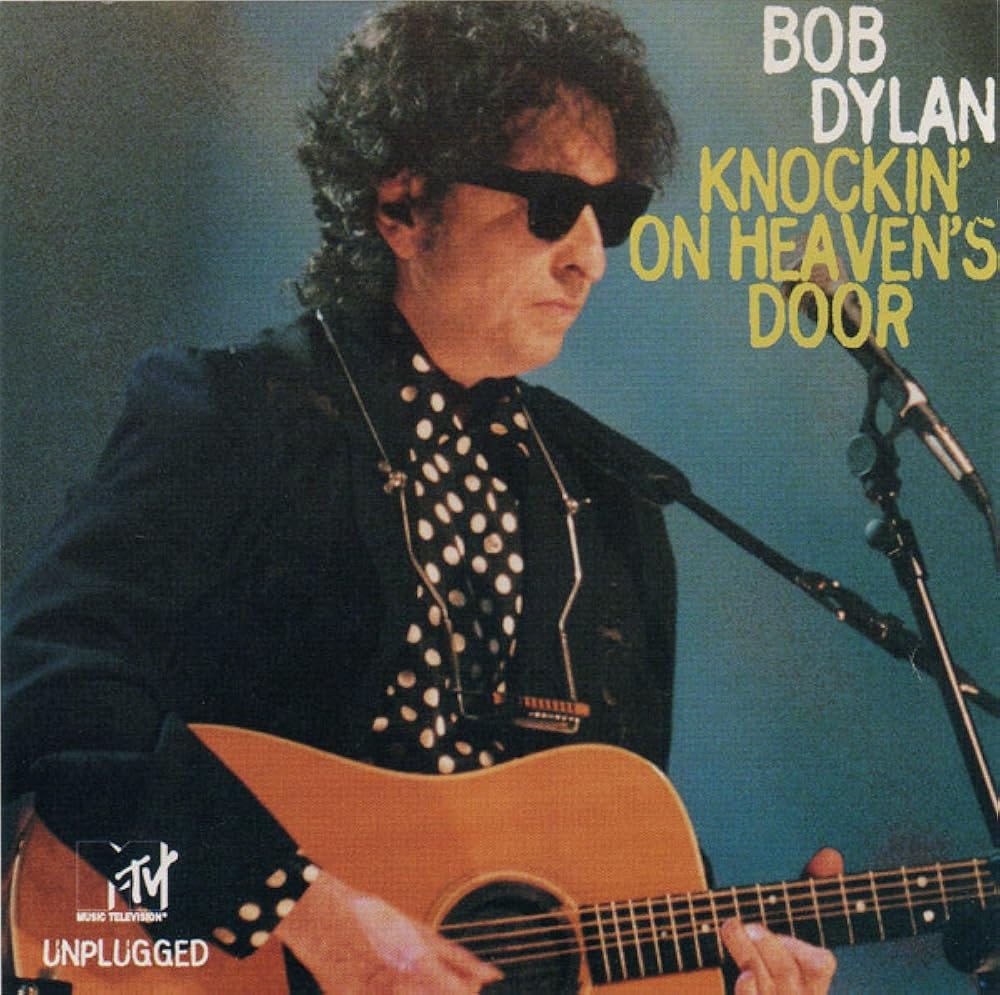
One of the Greats! 🎸 Knockin’ on Heaven’s Door
Guitar Breakdown with Instructional Video
“Knockin’ on Heaven’s Door” by Bob Dylan is one of the most recognizable and beginner-friendly songs in guitar history. Originally released in 1973 for the film Pat Garrett and Billy the Kid, the song became a staple due to its simplicity, emotional depth, and universal chord progression. Later, Guns N’ Roses popularized a more aggressive, electric version that introduced the song to a new generation of players.
At its core, the song revolves around a repeating four-chord progression:
G – D – Am – G – D – C
Basic Guitar Chords
Knowing basic guitar chords is essential for any guitarist because they form the foundation of most songs across various genres. Basic chords like G, C, D, and Em are building blocks that unlock coun…
This progression is what makes the song so accessible. It sits comfortably in the key of G major and uses open chords that most guitarists learn early in their journey. The structure repeats throughout nearly the entire song, allowing players to focus less on memorization and more on feel, timing, and expression.
From a technical standpoint, the right hand plays a crucial role. Beginners often start with simple downstrokes, strumming each chord evenly. However, as you grow more comfortable, you can introduce a more dynamic strumming pattern such as:
Down – Down – Up – Up – Down – Up
This pattern adds movement and groove, transforming the progression from static to flowing. The beauty of this song is that it allows flexibility, whether you play it softly with sparse strums or build intensity with fuller, rhythmic patterns, it still works.
The transition between chords is also a key learning opportunity. Moving from G to D requires a shift in hand position that builds coordination, while D to Am introduces a change in string grouping and finger placement. The C chord at the end of the progression provides a sense of resolution, grounding the sequence before it loops again. Practicing these transitions slowly helps develop muscle memory and clean tone.
For more advanced players, there are several ways to elevate the arrangement. You can incorporate arpeggios, picking individual strings within each chord to create a more melodic texture. Adding hammer-ons within the G or D chord shapes introduces subtle embellishments that enhance musicality without overcomplicating the structure. Lead players often use the G major pentatonic scale to improvise over the progression, which fits naturally due to the song’s tonal center.
Tone also plays a major role depending on the version you’re channeling. Dylan’s original leans toward a warm, acoustic sound clean, intimate, and storytelling-driven. In contrast, Guns N’ Roses’ version features overdriven electric guitars, layered textures, and expressive bends, especially in the lead sections. Both approaches are valid and highlight how the same chord progression can support completely different emotional landscapes.
What makes “Knockin’ on Heaven’s Door” truly powerful is not its complexity, but its restraint. It teaches an essential lesson for guitarists: feel matters more than flash. The repetition forces you to focus on timing, dynamics, and emotional delivery. Skills that translate far beyond this one song.
For any guitarist, this track serves as both an entry point and a long-term companion. You can start with basic chords on day one and continue refining your interpretation for years, layering in nuance, tone control, and personal style. It’s not just a song, it’s a framework for growth.
Do you need to elevate your play? CLICK HERE