

Stop Sounding Like Everyone Else
10 Step Guide to Voice and Tone with an Instructional Video
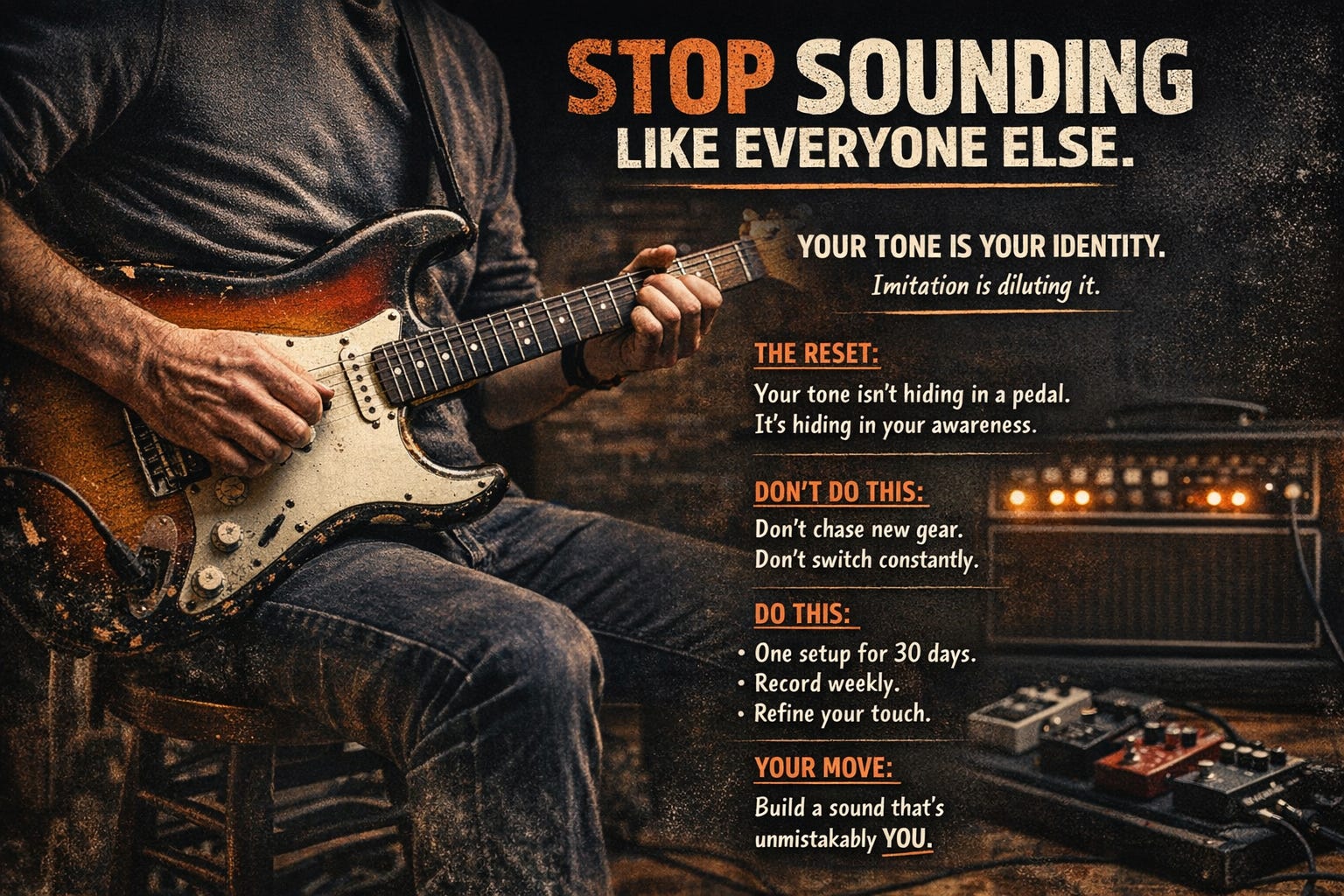
There is a hard truth most guitar players avoid: if someone covered your face and played your recording, would anyone know it was you?
Not because you’re not skilled. Not because you don’t care. But because your sound hasn’t separated from your influences yet.
Most guitarists spend years chasing tone externally. We copy rigs. We screenshot pedalboards. We buy signature pickups. We download presets. We tweak endlessly. And while there’s nothing wrong with studying your heroes, there is a problem when imitation becomes your permanent operating system.
Tone is not just gear. It’s not just EQ curves or boutique pedals. Tone is how you strike the string. How long you let a note ring. How wide your vibrato is. Whether your bends cry or feel mechanical. Whether you leave space or rush to fill it. Tone is physical. Emotional. Psychological.
When you build your own distinctive sound, you stop asking, “How do I sound like them?” and start asking, “What am I actually trying to say?”
That shift is everything.
The reset begins with this understanding:
Your tone is not missing. It is undeveloped.
Most players believe they haven’t “found” their sound yet. But tone is not a treasure hunt. It’s a refinement process. You already have tendencies. You already lean toward certain dynamics. You already prefer certain textures, warm cleans, biting mids, heavy compression, raw edge.
The issue isn’t absence. It’s awareness.
