The Mental Game
What musicians know about staying positive that most people miss

Musicians spend the majority of their time failing. Practicing a phrase means playing it wrong, over and over, until your hands stop making the mistake they’ve been making for years. There’s no illusion of progress. The metronome doesn’t lie. Your ears don’t lie. If it’s wrong, you know immediately.
And yet, the musicians who last are some of the most resilient people you’ll meet. Not because they’re wired differently, but because the instrument teaches you something that most self-help books never get around to: a positive mindset isn’t optimism. It’s a process you follow when things aren’t working.
Think about what a musician actually signs up for. Years, sometimes decades, of playing something imperfectly before it sounds any good. The first year of guitar is mostly frustrating. The calluses hurt. The chords buzz. Your brain can hear exactly what it should sound like, and your hands can’t get there. Most people quit in month three. The ones who don’t keep showing up anyway, not because every session is rewarding, but because they’ve made a quiet agreement with themselves: progress comes from the work, not from feeling ready to do it.
That agreement, repeated over years, builds something most people are still searching for: a reliable way to stay positive when results aren’t coming yet. Musicians don’t call it a mindset. They call it their practice routine. But the mental habits underneath it are exactly what coaches, therapists, and performance researchers point to when they talk about resilience, self-regulation, and long-term growth.
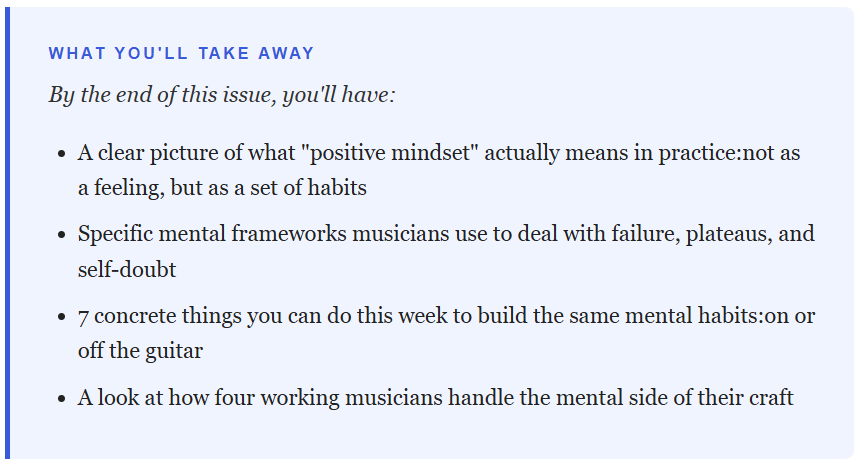
This issue breaks down what that process looks like, pulled from how musicians think, practice, and recover, and how you can use it whether you’re working on your playing or anything else in your life.