

Your Team Isn't Uncreative. Your Workplace Has No System for It.
A research-backed framework for building the conditions where creative thinking becomes consistent, not accidental.

The Creativity Gap Is Structural, Not Personal
In 1943, Abraham Maslow published his hierarchy of needs. Near the top sat self-actualization: the human drive to create, contribute, and solve at the highest level of one’s capacity. Eighty years later, most organizations still treat creativity as a bonus trait rather than a core operating condition. The result is a staggering amount of wasted potential sitting inside teams that could be producing far more than they do.
This is not a motivation problem. People want to contribute meaningful work. Survey after survey confirms it. The problem is structural. Workplaces are built for execution and compliance, not for the kind of divergent thinking that produces original ideas. Meetings reward consensus. Hierarchies reward caution. Deadlines reward speed over depth. Inside these conditions, creativity doesn’t thrive. It retreats.
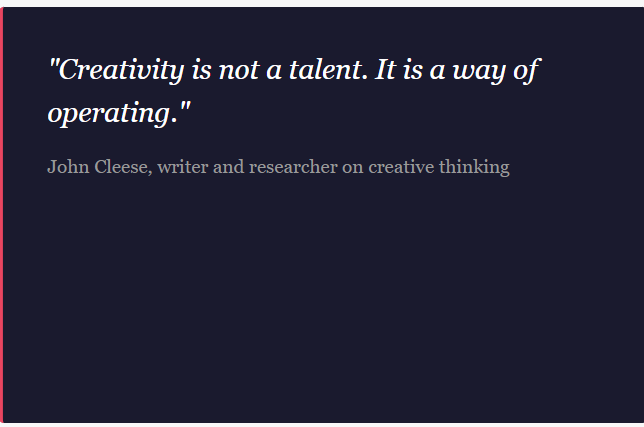
What organizations rarely grasp is that creativity is not a trait distributed unevenly across a workforce. It is a behavior that responds to environment. The same person who stares blankly in a conventional brainstorm will generate sharp, original ideas in a session structured to produce them. The environment determines the output. Change the environment and you change what your team is capable of.
The research on this is consistent. Companies that deliberately build creative cultures outperform peers on revenue growth, employee retention, and product innovation. The gap between high-creativity and low-creativity organizations is not marginal. It compounds over time. The companies at the bottom of that gap rarely trace it back to the structural conditions they built. They blame talent.
This article lays out a practical system for changing those conditions. Not a theory. Not a workshop you run once and forget. A repeatable set of practices your team can install and maintain, with a step-by-step 90-day roadmap for doing it.
The core argument is simple: creativity doesn’t show up when you wait for it. It shows up when you build the right conditions and protect them. Organizations that do this deliberately produce more ideas, act on more of them, and hold on to the people who generate them.
What the Research Shows
The business case for workplace creativity is not anecdotal. Decades of organizational research point to the same conclusion: environments that support creative thinking produce measurably better outcomes across every major business metric.
