You’re Not Stuck, You’re Avoiding Something.
Discomfort. Uncertainty. Perfectionism. The real reason you’re stalled isn’t lack of talent, it’s unexamined resistance.
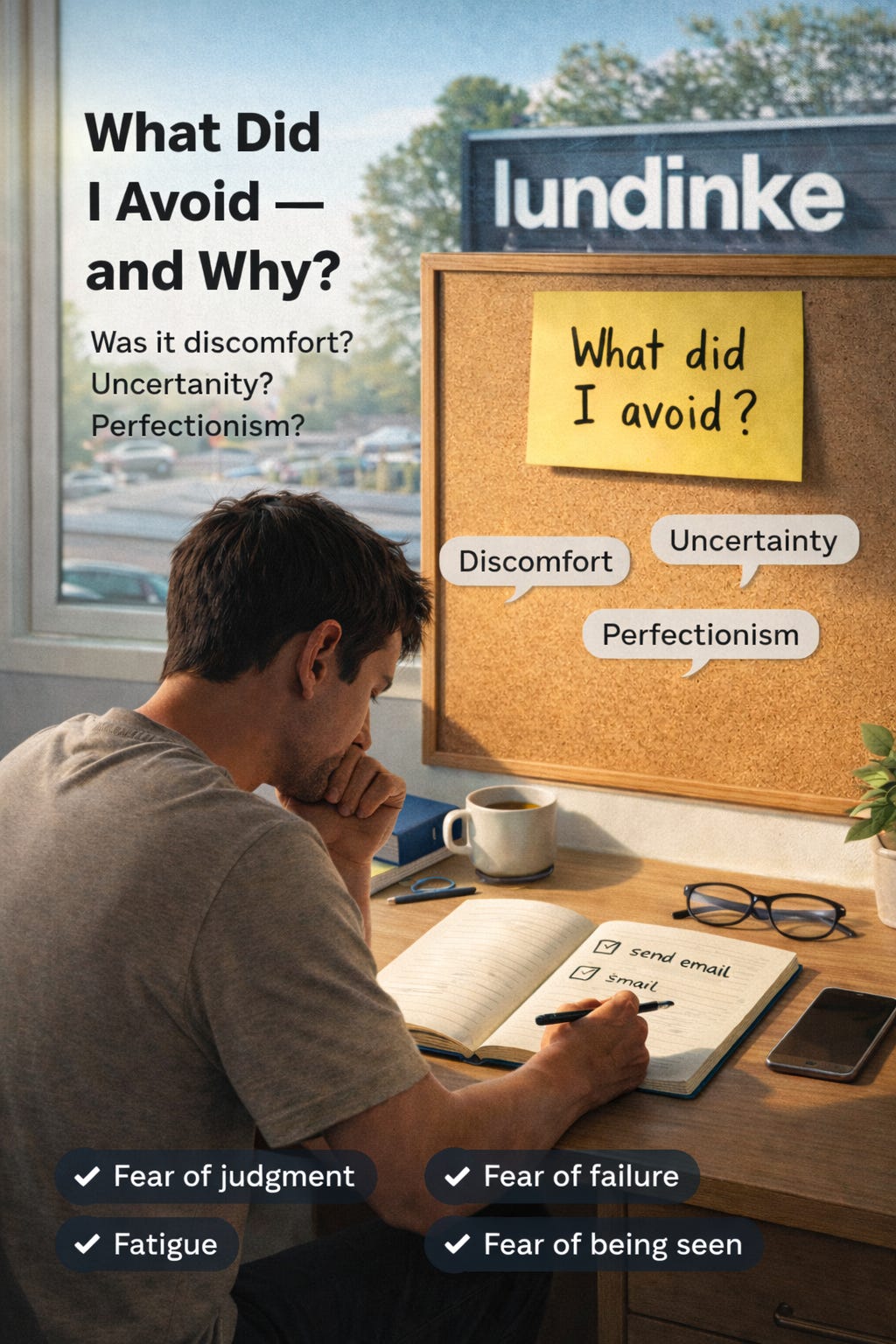
Every week leaves clues.
Not in your calendar.
Not in your highlights.
In what you didn’t do.
The message you didn’t send.
The call you postponed.
The hard thing you “didn’t have time” for.
The creative idea you didn’t publish.
If you want momentum, ask a better question:
What did I avoid and why?
Avoidance isn’t laziness. It’s information. And if you examine it honestly, it reduces next week’s resistance before it compounds.
Discomfort
Most avoidance traces back to discomfort.
Growth rarely feels calm. It feels unstable. When you step toward something meaningful, raising your rates, posting publicly, practicing the hard section slowly, pitching an idea, your nervous system reacts before your logic does.
Your brain asks: Is this safe?
If the answer feels uncertain, you pivot. You reorganize. You research. You tweak small things that feel productive but don’t move the needle.
Discomfort is often the sign you’re standing near something important.
The problem isn’t that it feels hard. The problem is when you interpret “hard” as “wrong.”
Uncertainty
Sometimes you avoided something because it was vague.
“Write the newsletter” feels heavy.
“Draft 150 messy words” feels manageable.
Ambiguity increases friction. When the next step isn’t clear, your brain postpones it. Not because you lack discipline, but because undefined tasks require more mental energy.
Clarity reduces resistance.
If you don’t know the smallest next action, you’ll keep delaying the bigger one.
Perfectionism
Perfectionism sounds noble. It often hides fear.
You didn’t post because it wasn’t ready.
You didn’t ship because it needed refinement.
You didn’t start because you wanted to “feel prepared.”
Underneath perfectionism is usually this:
“If this isn’t excellent, what does that say about me?”
Perfectionism delays exposure. Exposure builds confidence.
Confidence doesn’t come from being flawless. It comes from acting before you feel certain.
The Resistance Loop
Avoidance creates friction.
Friction creates guilt.
Guilt increases the emotional weight of the task.
By next week, it’s not just a task anymore. It’s a story about you.
That’s how resistance compounds.
But awareness breaks the loop.
When you name what you avoided and why, it becomes a strategy problem, not a character flaw.
A Simple Weekly Audit
Before planning next week, write:
1. One thing I avoided.
2. The real reason.
3. The smallest possible next step.
No drama. No self-criticism. Just clarity.
If it was discomfort → schedule it first.
If it was uncertainty → define the micro-step.
If it was perfectionism → ship at 80%.
If it was fatigue → adjust capacity honestly.
You don’t need more motivation.
You need less resistance.
The things you avoid most often are tied to identity expansion and being seen, charging more, committing publicly, leading differently.
Avoidance protects your current identity.
Execution expands it.
Expansion always feels unstable at first.
Ask the question before the week ends:
What did I avoid and why?
Awareness reduces next week’s resistance. And resistance, not talent and is what stalls most progress.


