

Purple Rain Wasn’t a Solo. It Was a Confession.
Why Prince’s most iconic guitar moment proves that restraint, vulnerability, and dynamic control will outlast speed every single time.
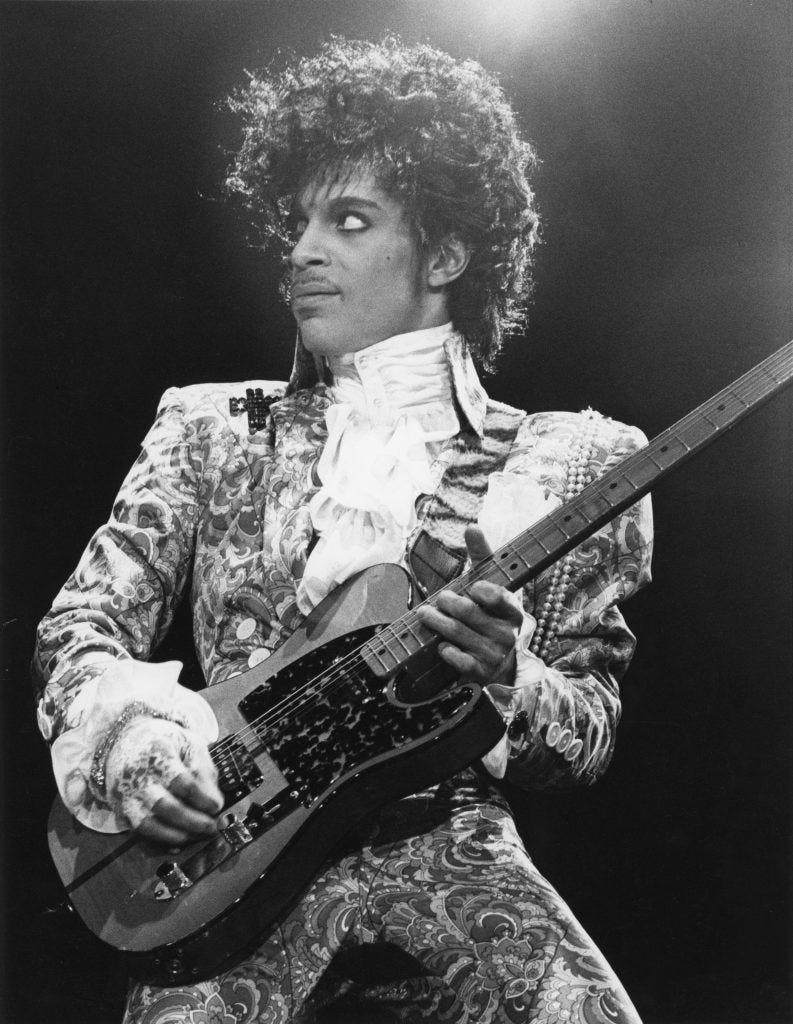
When Prince opens “Purple Rain,” the guitar doesn’t rush in, it breathes. The first chords don’t attack. They hover. Clean, spacious, almost patient. It’s not trying to impress you with speed. It’s setting a mood you can’t escape.
But the reason this song endures isn’t the solo everyone talks about. It’s the vulnerability underneath it.
Lyrically, “Purple Rain” isn’t really about rain. It’s about apology. It’s about wanting to protect someone you may have already hurt. The opening lines feel conversational, almost fragile. There’s no elaborate metaphor maze. Just longing. Just regret. Just the desire to make things right before it’s too late.
The brilliance is in its emotional accessibility. You don’t need to decode it. You feel it immediately. That’s why arenas go silent when it begins. The song invites reflection before it delivers release.
Guitar-wise, this is emotional architecture.
The progression leans heavily on open-position chords and sustained voicings that let the harmony ring. There’s space between the strums. Space between phrases. That restraint creates tension. The tone is clean at first, bright, chorus-kissed, slightly shimmering before gradually building into controlled overdrive.
The rhythm guitar doesn’t dominate. It supports. It allows the vocal to lead while quietly reinforcing the harmonic weight of each line. This is not busy playing. It’s intentional playing.
And then the solo arrives.
The famous outro solo isn’t technically dense in a shred sense. It’s melodic storytelling. Long bends. Wide vibrato. Notes that cry rather than sprint. The phrasing mirrors the emotional arc of the lyric. When the vocal reaches upward, the guitar answers. When the band swells, the bends widen. The guitar doesn’t compete with the song. It becomes the song.
Notice the dynamic control. The first half of the track is restrained. Controlled. Patient. Then the band expands. Drums grow larger. The distortion thickens. The solo stretches longer. It’s not about speed. It’s about escalation. The guitar acts like a slow-burning fuse that finally ignites.

What makes “Purple Rain” powerful is this: the guitar sounds human. Imperfect edges. Slight variations in vibrato. Sustained notes that almost break. It feels like someone standing under a spotlight, not hiding behind technique.
For players, the lesson is clear. Emotional pacing beats technical flash. A single bent note played with conviction can say more than thirty notes played perfectly.
If you want to build that kind of playing where the solo feels like a confession, subscribe to Lundinke. We don’t just analyze songs. We study why they move people.
Here’s a focused breakdown of the guitar techniques used in “Purple Rain,” a masterclass in emotional phrasing and dynamic control:
Sustained chord voicings that allow harmony to breathe
Clean-to-overdrive tonal progression for emotional escalation
Wide, expressive bends that mirror vocal phrasing
Controlled vibrato to extend emotional weight
Strategic use of space between phrases
Gradual dynamic build across the song’s structure
What This Teaches Guitar Players
This song isn’t technically complex, but it’s technically intentional. Every technique serves emotion, tension, and release.
The real takeaway?
Impact comes from restraint, phrasing, and dynamic awareness, not density.
If you can control your tone, let notes breathe, and build a solo that unfolds rather than explodes, you can create moments that last decades.
That’s not flashy guitar.
That’s emotional guitar.
Your Turn
If you’ve ever felt like slowing down actually makes you stronger, this is your invitation. At Lundinke, we break down songs that teach taste, timing, and emotional intelligence on the guitar—not just speed or theory. Subscribe and start building the kind of musicianship that actually lasts.

Ron Watson documents the intersection of guitar, mindset, and modern creative work at Lundinke. A lifelong guitarist, he began learning classical scales at age ten before building a career in finance and corporate leadership. Years later, the rhythmic pulse of samba rekindled his passion for both acoustic and electric guitar, sparking a creative reset that reshaped how he approaches growth, discipline, and purpose. Through Lundinke, Ron helps guitarists and professionals build clarity, consistency, and confidence on and off the fretboard. He explores how musical skillsets translate into sustainable careers and personal transformation. He still cringes at his early content and proudly publishes daily to serve a global community of players in motion.